Market Snapshot
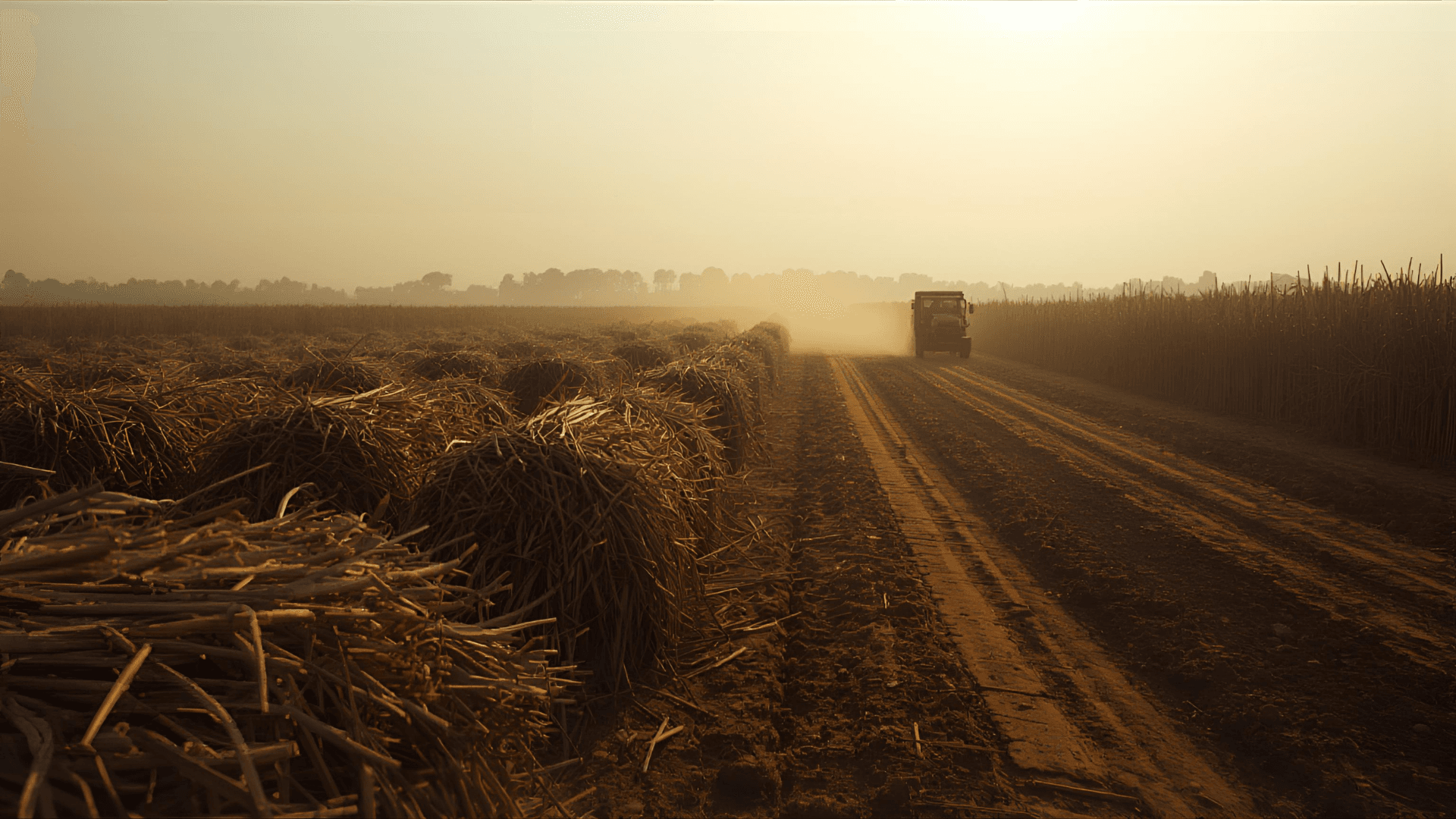
Brazil entered February deep in the Center-South inter-harvest period, yet export momentum remained unusually strong. That contrast — off-season logistics resilience alongside falling international prices — defined the month.
For buyers and traders, the signal was clear: Brazil’s influence over world sugar flows remains structural, and the current global surplus narrative continues to limit upside price pressure unless the incoming 2026/27 crop disappoints or faces disruption.
Exports Outran the Off-Season
Even with the crushing season effectively finished, Brazil’s export system continued to move large volumes through port channels.
Secex data compiled by Datamar showed that, over the first ten business days of February, sugar and molasses exports averaged 131,385 tonnes per day — 44% above the February 2025 daily average of 91,258 tonnes. Cumulative shipments in that ten-day window reached 1.31 million tonnes.
Daily export revenue rose 11.5% to USD 48.6 million. The smaller increase in revenue relative to volume reflected a weaker world sugar price environment. In practical terms, Brazil was shipping aggressively into a market that had already priced in abundant supply.
Prices Fell to Multi-Year Lows
ICE No. 11 raw sugar futures remained under pressure throughout February. The March 2026 contract opened near 14.53 c/lb, traded roughly within a 14.00–14.67 c/lb range in the first week, and drifted back toward 14.00 c/lb by mid-month.
That level marked the weakest raw sugar pricing since October 2020 and left the market roughly 29% below year-ago levels.
On February 12, nearest-month futures touched a 5¼-year low after updated surplus projections reinforced a bearish global supply view. The decline reflected not only Brazil’s export resilience, but also wider expectations tied to India and Thailand.
The Surplus Consensus
Multiple analyst houses reinforced the same broad conclusion during February: the world sugar balance remains in surplus, even if the scale differs by forecaster.
Czarnikow projected an 8.3 MMT global surplus for 2025/26 and 3.4 MMT for 2026/27. StoneX estimated a 2.9 MMT surplus for 2025/26. ISO revised its 2025/26 surplus estimate to 1.22 MMT from 1.625 MMT previously. Green Pool estimated a 2.74 MMT surplus for 2025/26 and a narrow 156,000 MT surplus for 2026/27.
The range between estimates reflects differing assumptions around Indian production, Thailand’s recovery, and Brazil’s sugar-versus-ethanol allocation. Even so, the directional conclusion remained consistent: supply is comfortable and stocks are rebuilding.
India added to the bearish tone in mid-February by approving an additional 500,000 MT sugar export quota, bringing its 2025/26 total allocation to 2.0 MMT. Even if actual shipments remain below the full quota, the policy move strengthened confidence in available exportable supply.
Looking Ahead to the 2026/27 Harvest
With the old crop nearly behind the market, attention shifted to the next Center-South harvest cycle. Most mills are expected to begin crushing in early April.
Safras & Mercado forecasts 2026/27 sugar production at 41.8 MMT, down 3.9% from the prior season, while projecting exports will decline 11% to 30 MMT.
Weather remains the key near-term variable. Summer rains across the São Paulo Cerrado during February and March help replenish soil moisture for ratoon cane, but they can also delay field operations and early harvest logistics. The timing of mill start-ups, early crush performance, and the sugar-to-ethanol mix will shape whether Brazil’s export flow remains unusually strong or starts to moderate.
What It Means for Buyers
February 2026 presented one of the most favorable procurement windows in five years. ICUMSA 45 white sugar quoted FOB Santos in the USD 430–480/MT range, well below the peaks seen in 2022 and 2023.
For buyers with flexibility to contract during Q1 2026, the market offered an opportunity to secure value before the 2026/27 crop picture becomes clearer.
The main strategic takeaway is straightforward: Brazil can continue dominating global sugar flows even during its off-season. That makes the opening weeks of the new harvest the most important variable for price direction in H1 2026. Watch mill start-up dates, early crush yields, weather across the cane belt, and any shift in the sugar-versus-ethanol allocation.
Methodology & Disclaimer
This analysis is prepared by the LAKAY BUSINESS Commodity Intelligence Desk using publicly available data from official Brazilian government agencies (Secex), industry associations (UNICA), international organizations (ISO), and established commodity research firms. All figures are attributed to their original sources and verified against multiple references where possible. Where data could not be confirmed, it is explicitly noted. This report is intended for informational purposes only and does not constitute trading advice. Past performance and market data do not guarantee future results.
Stay ahead of the sugar market
Get verified commodity intelligence, trade data, and procurement insights delivered to your feed. No speculation — only sourced analysis.